
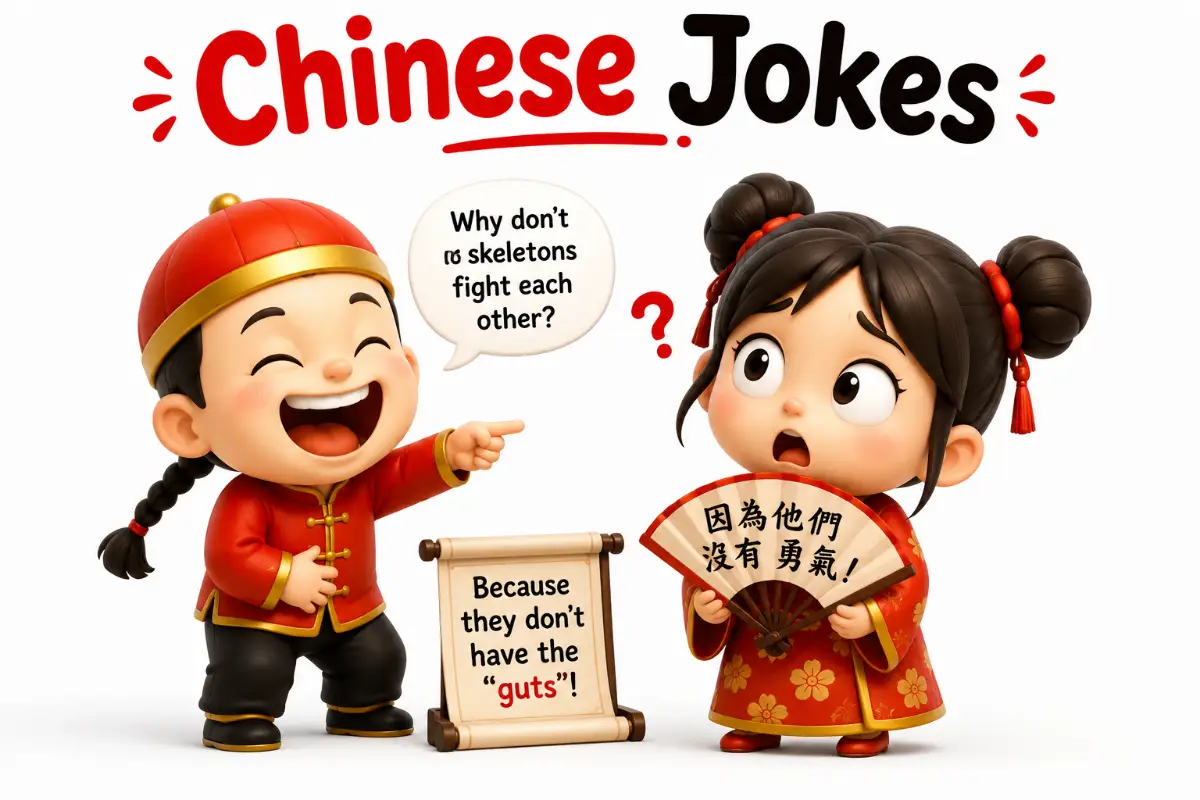
Chinese jokes on this list celebrate the fun side of food, the zodiac calendar, and the beauty of language, all wrapped into short, shareable puns anyone can enjoy.
Why do these puns work so well? They lean into things people already love: dumplings, lucky animals, and clever wordplay, turning familiar favorites into a quick laugh.
This list brings together all type of Chinese Humor, from dim sum to calligraphy to trivia night, all written fresh and ready to copy, paste, and share.
Classic Chinese Food Puns
These are the tried-and-true lines built around everyone’s favorite dishes. Simple, punchy, and perfect for a menu, a card, or a caption.
- Wonton to see you again.
- Chow down, chow mein style.
- Egg roll with the punches.
- Dumpling around never gets old.
- Soy happy to see this menu.
- Fried rice to the occasion.
- Noodle around and find out.
- Kung Pao you tonight.
- Spring roll with the good times.
- Lo mein favorite dish, hands down.
- Sweet and sour, just like life.
- Steamed buns, steamy mornings.
- Peking duck and cover, dinner’s here.
- Hot pot of good moods tonight.
- Sesame street to happiness.
- General Tso himself proud.
- Bok choy of my life.
- Tofu or not tofu, that is the question.
- Sizzling rice, sizzling night.
- Dim sum day, dim sum way.
- Rice to the occasion.
- Wok this way to dinner.
- Chopstick together, we’re better.
- Takeout the trash, takeout dinner.
Expert Advice: Print one of these on a card for your next takeout order. It’s a small surprise that makes dinner feel like an event.
Short Dumpling and Noodle One-Liners
Sometimes shorter is better. These bite-sized puns are built for captions, menus, and quick texts.
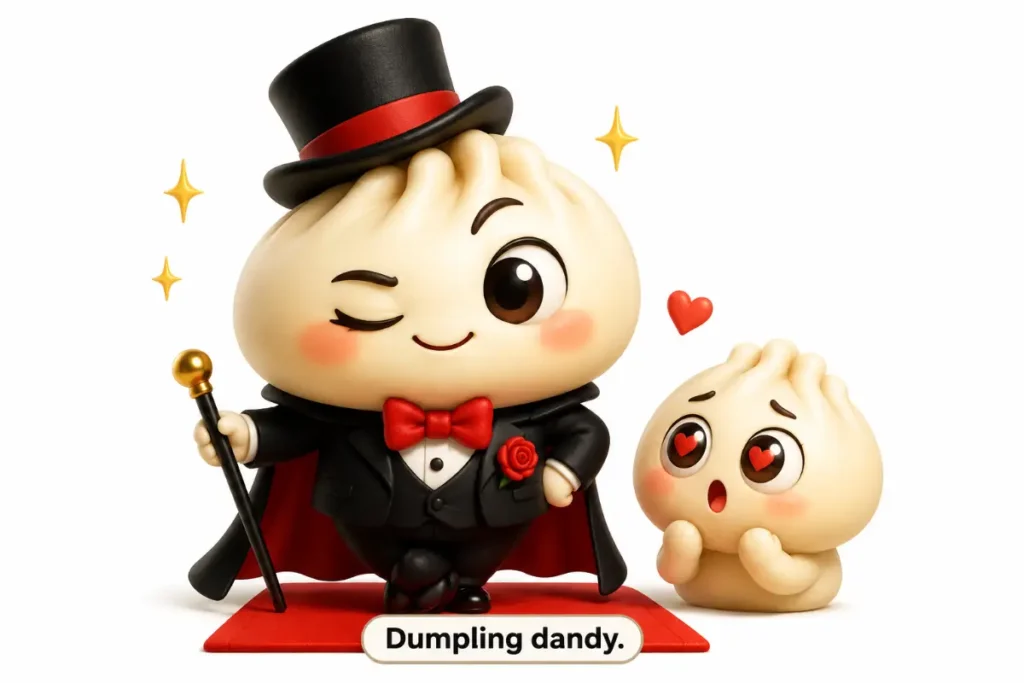
- Dumpling dandy.
- Noodle doubt about it.
- Wonton more, please.
- Chow time.
- Steamed and dreamy.
- Slurp-worthy every time.
- Brother from another wonton.
- Dough-lightful bites.
- Filling good vibes only.
- Pot stickers for the win.
- Twist and steam.
- Bite-sized happiness.
- Sauce boss status.
- Wrap it up, dumpling style.
- Simmer down, dinner’s ready.
- Skewer the competition.
- Savory and unforgettable.
- Bundle of joy, dumpling edition.
- Folded with love.
- Batch of happiness.
- Piping hot perfection.
- Silky noodles, happy soul.
- Twirl-worthy noodles.
- Comfort in every bowl.
Expert Advice: Keep this section bookmarked for captions. A short line under a food photo gets more likes than a long, wordy post ever will.
Chinese Takeout Jokes for Work Lunches
Office lunches run on takeout menus and shared dumplings. These jokes are made for the break room and every Friday order.
- Why did the office order takeout on Friday? Everyone needed a wonton break.
- What do you call a coworker who always orders the same dish? A chow meinstay.
- Why did the delivery driver get a bonus? For beating every noodle deadline.
- What did the fortune cookie say to the tired employee? Your luck is about to change.
- Why did the team celebrate with dumplings? It was reason enough for a good week.
- What do you call a lunch break spent on egg rolls? Roll call, obviously.
- Why did the manager approve the takeout budget? For office morale.
- What’s an accountant’s favorite dish? Anything that adds up, like fried rice.
- Why did the intern bring extra napkins? The sauce situation got messy.
- What do you call a meeting that ends in dumplings? A win-win.
- Why did the office order two hot pots? One wasn’t enough for the whole team.
- What’s a deadline’s favorite noodle dish? Whatever’s fastest to make.
- Why did the chopsticks get promoted? They always stuck together as a team.
- What do you call a lunch order with extra rice? A backup plan.
- Why did the coworker share their fortune cookie? Good luck is better shared.
- What’s the office’s favorite Friday tradition? Takeout and small talk.
- Why did the team trust the same restaurant every week? It never let the menu down.
- What do you call a productive lunch hour? Full stomach, full focus.
- Why did the boss order dumplings for the whole floor? To wrap up a good quarter.
- What’s a busy day’s best friend? A quick stir-fry order.
- Why did the receptionist memorize the takeout menu? For every hungry afternoon.
- What do you call a lunch order mistake? A mix-up worth laughing about.
- Why did the team order extra spring rolls? Everyone wanted a crunchy ending to the week.
- What’s the secret to a good office lunch? Enough noodles to go around.
Expert Advice: Post one of these near the office takeout menu on Fridays. It’s a small, easy way to make ordering lunch a little more fun.
Chinese Zodiac Animal Jokes
Each zodiac animal brings its own personality to the table. These jokes celebrate the twelve signs and the traits people love about them.
- Why did the Rat win the zodiac race? It was always one step ahead.
- What do you call a stubborn zodiac animal? The Ox, without a doubt.
- Why did the Tiger skip the party early? It preferred to make a bold entrance later.
- What’s the Rabbit’s favorite zodiac trait? Staying quick on its feet.
- Why did the Dragon get all the attention? It always brought the sparkle.
- What do you call a calm zodiac sign? The Snake, cool under pressure.
- Why did the Horse never slow down? It loved the race.
- What’s the Goat’s favorite zodiac quality? Staying gentle through it all.
- Why did the Monkey win every game? It always found a clever trick.
- What do you call a zodiac sign that loves mornings? The Rooster, obviously.
- Why did the Dog get picked as a best friend? Its loyalty never wavered.
- What’s the Pig’s favorite zodiac trait? Enjoying every feast.
- Why did the Rat and Ox finish the race together? Teamwork made the difference.
- What do you call a zodiac year full of surprises? A Dragon year, naturally.
- Why did the Tiger’s year feel different? It always brought a little more courage.
- What’s a Rabbit’s favorite season? Anything calm and steady.
- Why did the Snake’s year feel mysterious? It kept everyone guessing.
- What do you call a Horse’s approach to life? Full speed ahead.
- Why did the Goat’s year feel peaceful? It brought a gentle kind of luck.
- What’s the Monkey’s favorite zodiac skill? Thinking on its feet.
- Why did the Rooster’s year start loud? It never missed a chance to announce itself.
- What do you call a Dog’s zodiac year? Loyal through and through.
- Why did the Pig’s year feel lucky? Good fortune always found a seat at the table.
- What’s the secret to a great zodiac year? Whichever animal brings the most luck.
Expert Advice: Share one of these when someone asks about their zodiac year. It’s a light, fun way to talk about a sign without any guesswork.
Fortune Cookie Style One-Liners
Fortune cookies are famous for turning a simple sentence into something worth saving. These lines follow that same short, wise format.
- Good luck finds those who share their dumplings.
- A wise cook never rushes the wok.
- Patience simmers longer than any broth.
- Your next fortune is one bite away.
- Happiness hides inside every dumpling fold.
- Success tastes better with soy sauce.
- A journey of a thousand miles begins with one noodle.
- Kindness travels faster than steam.
- Prosperity waits at the bottom of every bowl.
- A smile is the best seasoning.
- Fortune favors the hungry.
- Wisdom grows with every shared meal.
- Balance is the secret ingredient.
- Joy multiplies when the pot is full.
- A good friend always saves the last dumpling.
- Curiosity leads to the best takeout order.
- Gratitude tastes sweeter than fortune cookies.
- Opportunity knocks twice, once for seconds.
- Harmony starts with a full table.
- Courage is trying a new dish.
- Peace begins with a warm bowl of soup.
- Generosity shares the last spring roll.
- Hope is the steam rising from the pot.
- Contentment is a full plate and good company.
Expert Advice: Write one of these on a small paper strip and tuck it into a lunch bag. It’s a tiny surprise that turns an ordinary meal into a good one.
Chinese Language and Wordplay Jokes
Language has its own kind of humor, from clever characters to perfect brushstrokes. These jokes celebrate the craft behind every word.
- Why did the word for “thank you” get so popular? Everyone wanted to say it twice.
- What do you call a well-mannered chopstick? Always polite, never rude.
- Why did the calligrapher never rush? Every stroke mattered.
- What’s a translator’s favorite hobby? Finding the perfect word.
- Why did the character for “happiness” get framed? It deserved a spot on the wall.
- What do you call a fluent speaker of two languages? Double the vocabulary, double the fun.
- Why did the brush pause before writing? It wanted every line to count.
- What’s a language student’s favorite reward? Finally getting the tone right.
- Why did the scroll get so much attention? Its characters told a great story.
- What do you call a perfectly written character? A small piece of art.
- Why did the student practice every day? Mastering strokes takes patience.
- What’s a poet’s favorite tool? Whatever captures the right meaning.
- Why did the seal stamp get admired? It gave every letter a personal touch.
- What do you call a well-balanced sentence? Perfectly structured.
- Why did the ink brush never dry out? It stayed busy with new ideas.
- What’s a linguist’s favorite challenge? Finding the right rhythm in every phrase.
- Why did the paper scroll unroll slowly? Every word deserved attention.
- What do you call handwriting passed down for generations? A family tradition.
- Why did the teacher praise the calligraphy homework? Every character showed real effort.
- What’s the hardest part of learning new characters? Getting the order of strokes right.
- Why did the student frame their first character? It was worth celebrating.
- What do you call a beautifully written poem? A gift of words.
- Why did the artist choose ink over paint? For the elegance of a single stroke.
- What’s the reward for years of practice? Characters that finally flow.
Expert Advice: Share one of these with someone learning a new language. It reframes the hard parts, like tones and strokes, as small wins worth celebrating.
Dim Sum and Dumpling Puns
Dim sum turns a meal into a whole event, one small plate at a time. These puns celebrate the carts, baskets, and bites that make it special.
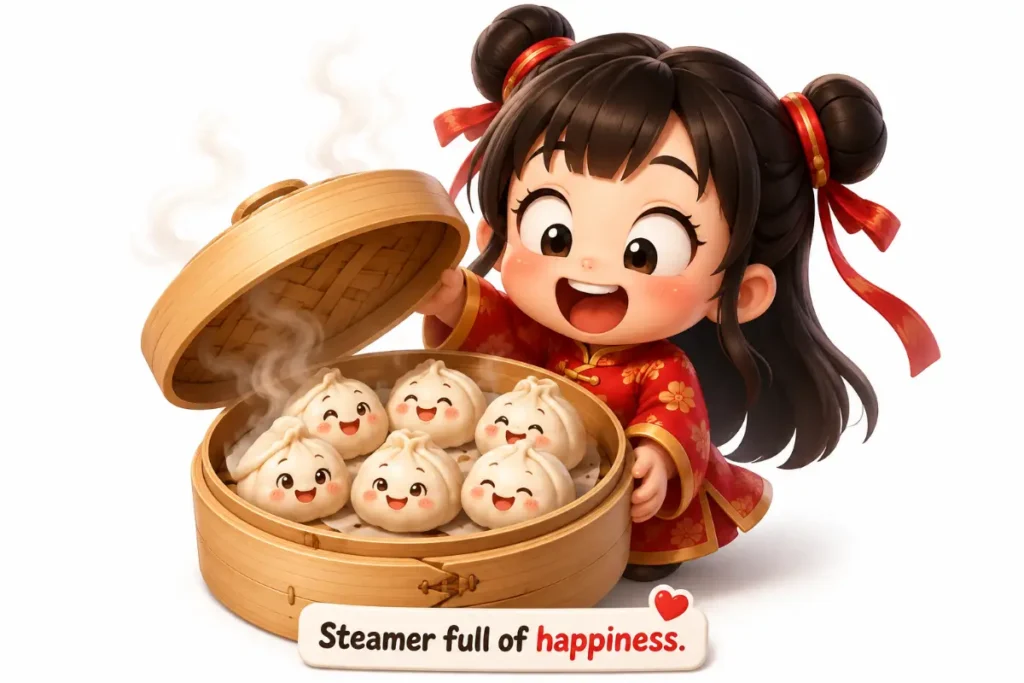
- Steamer full of happiness.
- Dim sum day, dim some more.
- Bamboo basket, big flavor.
- Bite-sized bliss.
- Wrap star of the table.
- Pleated to perfection.
- Bao-tiful morning ahead.
- Char siu the day.
- Har gow to it.
- Sticky rice, sticky situation.
- Cart full of good choices.
- Shrimply the best brunch.
- Folded with skill, filled with flavor.
- Peeling good about this meal.
- Skewered happiness.
- Bundle of joy.
- Tea and dim sum, perfect pair.
- Crispy on the outside, cozy inside.
- Chef‘s special, table’s favorite.
- Tableside treasure.
- Rounds of dumplings, endless smiles.
- Savor every bite.
- Basket case, in the best way.
- Second helping required.
Expert Advice: Save these for a dim sum outing with friends. Read one out loud between carts and watch the whole table start laughing.
Chinese New Year Puns
Chinese New Year brings lanterns, red envelopes, and a table full of lucky dishes. These puns capture the whole celebration.
- Lucky to ring in the new year.
- Red envelopes, bright futures.
- Firecracker spirit all around.
- Lanterns light the way forward.
- Dumpling season has arrived.
- Prosperity starts with a good meal.
- Dragon dance, endless chances.
- Fortune favors the festive.
- New year, new noodles.
- Family first, feast second.
- Blessings wrapped in red paper.
- Celebration simmering all week long.
- Reunion dinner, endless memories.
- Golden year ahead.
- Wishes tied to every lantern.
- Feast fit for good fortune.
- Joy multiplies at the table.
- Tradition passed down, plate by plate.
- Spring cleaning, fresh beginnings.
- Gathering of good luck and good food.
- Symbolic dishes, endless meaning.
- Countdown to a lucky year.
- Warmth shared over dumplings.
- Celebration never tasted so good.
Expert Advice: Add one of these to a New Year card alongside a red envelope. It’s a small, festive touch that goes with the tradition perfectly.
Rice and Noodle Puns
Rice and noodles show up in almost every meal, and they deserve their own spotlight. These puns celebrate the everyday staples.
- Fried rice to the occasion.
- Sticky situations call for sticky rice.
- Noodle around, find your favorite bowl.
- Grain by grain, patience pays off.
- Slurp-worthy every single time.
- Bowled over by flavor.
- Steamed to perfection.
- Twirling noodles, twirling joy.
- Brother, this soup is amazing.
- Simmer down and enjoy.
- Wok-ing on a masterpiece.
- Rice cooker, life saver.
- Chewy and unforgettable.
- Silky strands, happy hearts.
- Bite-sized comfort.
- Steamy bowls on cold days.
- Savor every strand.
- Comfort food, no contest.
- Warm bowl, warmer memories.
- Filling in every sense.
- Second bowl, no regrets.
- Perfect pairing, rice and soy sauce.
- Rich flavor, humble grain.
- Endless bowl of good vibes.
Expert Advice: Use one of these as a caption for a homemade noodle photo. Simple food, simple pun, instant engagement.
Chopsticks Jokes
Chopsticks take practice, and every beginner has a story. These jokes celebrate the learning curve and the payoff.
- Why did the chopsticks never argue? They always stuck together.
- What do you call chopsticks that work well as a team? Perfectly paired.
- Why did the beginner drop the noodles? Still building skill.
- What’s a chopstick’s favorite exercise? Gripping the basics.
- Why did the chopsticks get promoted at the restaurant? They never let a dumpling slip.
- What do you call a chopstick that works alone? Incomplete.
- Why did the diner practice with chopsticks at home? To master the technique.
- What’s the hardest food to pick up with chopsticks? Whatever tests your patience.
- Why did the chopsticks get a standing ovation? Flawless coordination.
- What do you call two chopsticks in perfect sync? Balance achieved.
- Why did the child finally get the hang of chopsticks? Plenty of practice at dinner.
- What’s a chopstick’s biggest fear? Slippery noodles.
- Why did the waiter bring extra napkins? Chopstick mishaps happen.
- What do you call an expert with chopsticks? Impressively precise.
- Why did the chopsticks never get separated? They belonged together as a set.
- What’s the secret to using chopsticks well? A steady hand.
- Why did the restaurant offer chopstick lessons? For every curious guest.
- What do you call a chopstick that finally grabs the last dumpling? Victorious.
- Why did the chopsticks earn applause after dinner? Not a single dropped bite.
- What’s a chopstick’s favorite challenge? Peanuts, the ultimate test.
- Why did the beginner laugh at their first attempt? Everyone starts somewhere.
- What do you call chopsticks made for kids? Training wheels for dinner.
- Why did the chopstick set become a gift? Practical and thoughtful.
- What’s the reward for chopstick mastery? Never missing a single bite.
Expert Advice: Share one of these with a friend still learning to use chopsticks. It turns a frustrating first try into a shared laugh instead.
Tea and Chinese Tea Culture Puns
Tea culture is built on patience and ritual, and these puns capture the calm behind every cup.
- Steep into the moment.
- Brewing calm, one cup at a time.
- Leaf it to tea to fix everything.
- Poured with tradition.
- Warm cup, warmer conversation.
- Aroma that says welcome.
- Ceremony in every cup.
- Sip slowly, savor fully.
- Steam rising, stress falling.
- Blend of calm and comfort.
- Herbal hugs in a mug.
- Ritual worth repeating daily.
- Fragrant moments, one pour at a time.
- Golden hour, golden tea.
- Patience brews the best cup.
- Calming sip after a long day.
- Tradition poured with care.
- Comforting warmth, cup after cup.
- Gathering around good tea.
- Mindful moments, one sip at a time.
- Delicate leaves, delightful cup.
- Refreshing pause in a busy day.
- Timeless tradition, endless cups.
- Peaceful pour, peaceful mind.
Expert Advice: Use one of these on a tea shop menu or gift tag. It matches the quiet, unhurried mood tea is known for.
Panda Puns for Kids
Pandas bring instant charm to any joke, making them perfect for kids and animal lovers alike.
- Pandamonium at snack time.
- Bamboo believe how cute pandas are.
- Roly-poly and full of joy.
- Paw-some panda friends.
- Cuddly and always hungry.
- Black and white, all kinds of adorable.
- Beary good at napping.
- Tumble-worthy playtime.
- Snack break, panda style.
- Fuzzy friends make the best days.
- Roll with the punches, panda style.
- Gentle giant, big heart.
- Chew-tiful moments with bamboo.
- Playful paws, happy hearts.
- Snuggly and sweet.
- Curious cub, endless adventures.
- Waddle your way to fun.
- Bright-eyed and bushy-tailed.
- Napping champion of the forest.
- Furry friend, forever favorite.
- Bouncy and full of bamboo.
- Cheerful cub, contagious smile.
- Sweet as a panda’s smile.
- Gentle roar, big personality.
Expert Advice: Read a few of these out loud at bedtime. Panda puns are simple enough for kids to repeat and giggle at on their own.
Chinese Restaurant Sign Puns
Every restaurant needs a sign that makes customers smile before they even sit down. These puns are ready to hang up front.
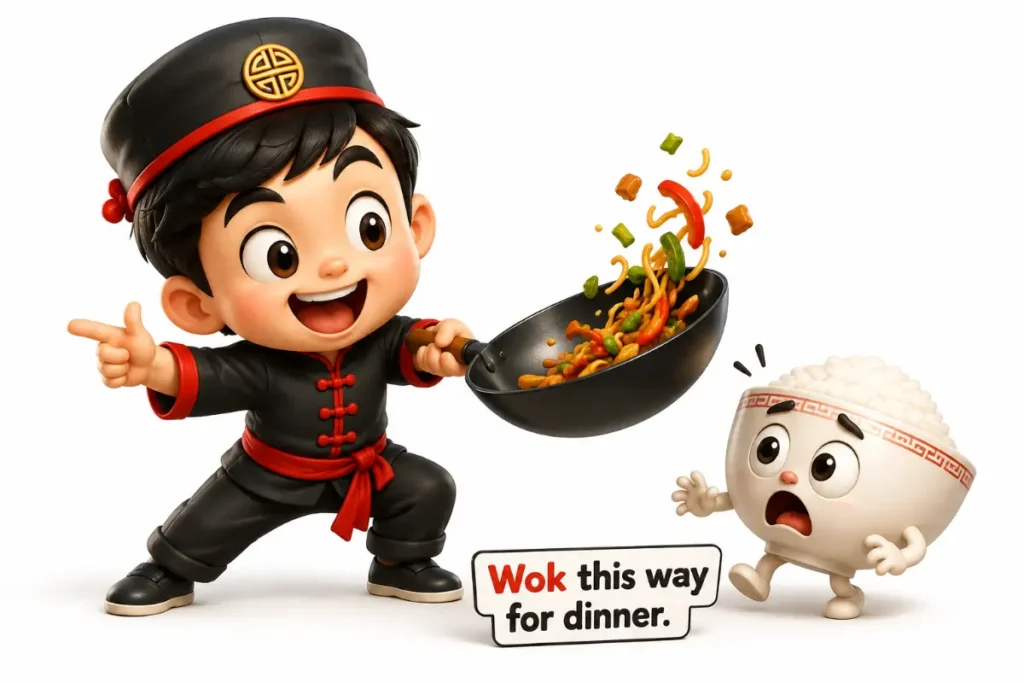
- Wok this way for dinner.
- Wonton to see you again soon.
- Noodle around, stay awhile.
- Steamed to perfection here.
- Dumpling happiness served daily.
- Rice to meet you.
- Chow down, we’ve got you covered.
- Spice things up tonight.
- Fresh flavors, fast service.
- Savor every dish here.
- Tasty stop, right this way.
- Family-style favorites served daily.
- Sizzling specials all week.
- Comfort food, comfort prices.
- Full menu, fuller stomachs.
- Homemade taste, every single time.
- Fragrant kitchen, warm welcome.
- Fresh wok, fresh flavor.
- Bold flavors, warm service.
- Second helpings encouraged.
- Delightful dishes, every visit.
- Warm welcome, warmer food.
- Crafted with tradition.
- Generous portions, happy guests.
Expert Advice: Rotate a new sign each week. Regulars start checking the board just to see which pun greets them next.
Kung Fu and Martial Arts Wordplay
Martial arts bring discipline, focus, and a whole lot of motion. These puns celebrate the mindset behind the moves.
- Kick-start your morning with tea.
- Punch up your day with a laugh.
- Balance is the real superpower.
- Focus like a true master.
- Strike a good mood today.
- Discipline brews the best results.
- Kung fu grip on good vibes.
- Steady stance, steady mind.
- Practice makes every day better.
- Strength in every small step.
- Flow like water, laugh like thunder.
- Precision in every move.
- Patience trains the best masters.
- Grace under pressure, always.
- Sharp mind, sharper wit.
- Form follows a good laugh.
- Momentum carries the day forward.
- Calm center, chaotic world.
- Master of the small moments.
- Power in every deep breath.
- Skill comes with practice.
- Focused mind, lighter heart.
- Determined steps, better days.
- Harmony between mind and body.
Expert Advice: Use one of these before a workout or practice session. It’s a light way to get in the right headspace before the real training starts.
Chinese Calligraphy and Character Puns
Calligraphy turns every character into a small work of art. These puns celebrate the patience and skill behind each stroke.
- Stroke of genius, every line.
- Ink and inspiration, perfectly paired.
- Brush with greatness.
- Character building, one stroke at a time.
- Elegant lines, endless meaning.
- Precision in every curve.
- Artistry in every character.
- Timeless beauty, brushed on paper.
- Steady hand, striking result.
- Story told in every stroke.
- Balance between form and flow.
- Patience paints the best pictures.
- Delicate touch, powerful message.
- Crafted with intention.
- Tradition carried on every scroll.
- Meaning behind every mark.
- Focused strokes, beautiful results.
- Legacy written line by line.
- Graceful curves, generations of skill.
- Detail in every dot.
- Practice perfects every character.
- Symbolic beauty, one page at a time.
- Rhythm found in every stroke.
- Mastery takes a lifetime.
Expert Advice: Frame one of these next to a calligraphy piece as a gift. It adds a light touch to a very thoughtful present.
Chinese Jokes for Game Night and Trivia
Game night runs better with good food and better puns. These jokes fit trivia rounds, card games, and every competitive moment.
- Why did the fortune cookie join trivia night? It always had the right answer hidden inside.
- What do you call a game night with dumplings on the table? A win-win situation.
- Why did the zodiac trivia round get competitive? Everyone wanted to claim the smartest animal.
- What’s a chopstick’s favorite game? Anything that tests precision.
- Why did the tea kettle join the trivia team? It always brought the heat.
- What do you call a perfect trivia answer about noodles? A slam dunk.
- Why did the calligraphy question stump the team? Every stroke had a hidden meaning.
- What’s a dumpling’s favorite card game? Anything with good teamwork.
- Why did the Rooster win the zodiac round? It never missed a chance to crow about it.
- What do you call a trivia night fueled by dim sum? Sharp minds, full stomachs.
- Why did the Dragon dominate the game? It brought confidence to every round.
- What’s the best snack for game night? Whatever keeps the momentum going.
- Why did the fortune cookie messages get so popular mid-game? Everyone wanted a little luck.
- What do you call a trivia team named after the zodiac? Unbeatable strategy.
- Why did the noodle question take so long to answer? Too many twists to consider.
- What’s a tea ceremony’s favorite trivia category? Anything about patience.
- Why did the Ox win the tiebreaker? Slow and steady wins every time.
- What do you call a well-matched trivia duo? Perfectly balanced.
- Why did the Monkey team take the lead? Clever strategy from the start.
- What’s the secret to winning a food-themed trivia round? Knowing your dumplings from your noodles.
- Why did the calligraphy round feel exciting? Every character told a different story.
- What do you call a trivia night that ends with dessert? A sweet finish.
- Why did the Rabbit’s team stay ahead? Quick thinking the whole game.
- What’s the best way to end game night? A shared meal and a little luck.
Expert Advice: Read a few of these out loud between rounds. It keeps the mood light, even when the trivia questions get tough.
Final Word: Share the Fun
There you have it: sixteen categories and hundreds of Chinese jokes covering food, zodiac animals, and language wordplay, all ready for menus, cards, and trivia night. Which category made you smile first?
The best Chinese jokes are the ones worth sharing. Copy your favorite, send it to a friend, or drop it in the comments below, and let us know which line earned a spot on your next dinner table.
Bookmark this page for the next time you need a quick laugh, and share it with someone who could use a fresh batch of puns today.
FAQs
What are some good Chinese puns?
Chinese puns often play with words that have similar sounds or multiple meanings. Some light examples include wordplay involving 发 (fā), which can relate to getting rich, and 鱼 (yú), which sounds like “余,” associated with abundance.
What are some Chinese slang phrases?
Common Chinese slang phrases include 厉害了 (lìhài le) for expressing admiration, 给力 (gěilì) for something impressive or effective, 坑爹 (kēngdiē) for something frustrating or disappointing, and 666 (liù liù liù) as online slang for saying someone is skilled or impressive.
How do you say “pun” in Chinese?
The Chinese word for pun is 双关语 (shuāngguān yǔ). It describes wordplay in which a word or expression has two meanings or creates an effect through similar sounds.
What is funny in Chinese?
Chinese wordplay is often funny because many Chinese characters have similar pronunciations but different meanings. This makes homophones, double meanings, and creative phrases especially useful for humor.
What are some funny Chinese wordplay examples?
A classic type of Chinese wordplay uses 鱼 (yú) and 余 (yú) because they sound the same. For example, 年年有余 (niánnián yǒu yú) is a traditional New Year expression wishing people abundance year after year.
How do Chinese people name their kids?
Chinese names are often chosen based on meaningful characters, family traditions, cultural values, and hopes for the child. Some families also consider how the given name sounds with the family surname.
What are some good Chinese phrases?
Popular Chinese phrases include 你好 (nǐ hǎo) for “hello,” 谢谢 (xièxie) for “thank you,” 加油 (jiāyóu) for “keep going,” 祝你好运 (zhù nǐ hǎo yùn) for “good luck,” and 恭喜发财 (gōngxǐ fācái), a traditional New Year blessing meaning “wishing you prosperity.”
What do you call a surprised Chinese person?
For respectful humor, it is better to avoid jokes that make a person’s ethnicity the punchline. A playful alternative is a wordplay-based line such as: “What do you call someone who is surprised? A person who just got a very unexpected ni hao!” This keeps the humor focused on language rather than ethnicity.

Ben Punderwood is a Seattle-based humor writer who has been writing pun-focused content for digital publications and humor blogs for several years. At UltimatePuns.com, he focuses on crafting clean, clever wordplay from everyday language and trends. Outside writing, he studies how language evolves online—mostly to find better material for jokes.